 فارسی
فارسی






Best Types of Brick Dryers for Industrial Factories: Performance and Efficiency Comparison
Brick manufacturing is one of the fundamental pillars of the construction industry, and the final product quality is directly influenced by intermediate production processes. Among these stages, drying raw bricks before firing is the most critical phase. Choosing the best types of brick dryers for industrial factories not only impacts the final quality of the product but also determines waste rates, energy consumption, and overall factory profitability.
In many production units, poor drying systems have led to surface cracks, internal fractures, and even significant reductions in compressive strength after firing. On the other hand, factories that use engineered and modern drying systems have managed to reduce waste to below 3%. In this comprehensive guide, we thoroughly examine the best types of brick dryers for industrial factories, comparing their performance, efficiency, and investment value to help you make data-driven decisions rather than relying on market claims.
The Critical Role of Brick Dryers in the Production Line
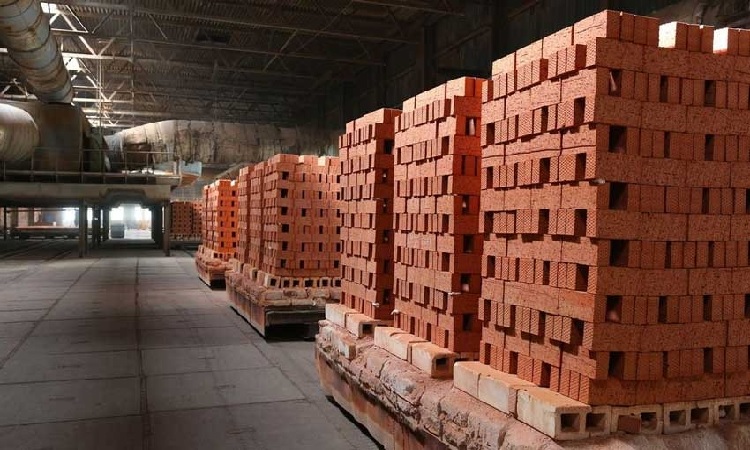
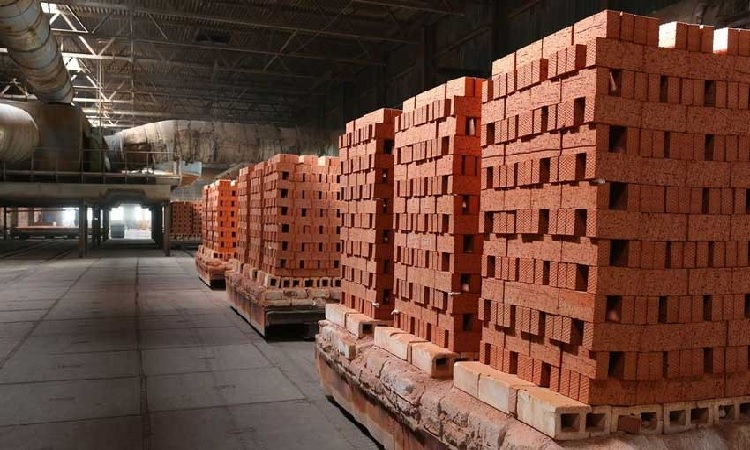
After molding, raw bricks contain a significant amount of moisture. If this moisture evaporates too quickly, internal stress forms and structural cracks appear in the brick body. An industrial brick dryer must gradually and uniformly reduce moisture levels to maintain the structural integrity of the clay.
Three essential factors define an effective drying system: precise temperature control, humidity management, and uniform airflow distribution. Any imbalance in these elements can result in quality loss. Therefore, selecting the best types of brick dryers for industrial factories must be based on engineering data and real operational conditions.
Main Types of Industrial Brick Dryers
In modern brick manufacturing, several types of dryers are commonly used, each suitable for specific production conditions:
Tunnel Dryer
Chamber Dryer
Multi-stage Continuous Dryer
Heat Recovery Dryer Integrated with Kiln Systems
Each of these systems differs in production capacity, energy efficiency, investment cost, operational complexity, and overall productivity.
Tunnel Dryer: The Preferred Choice for Large-Scale Production
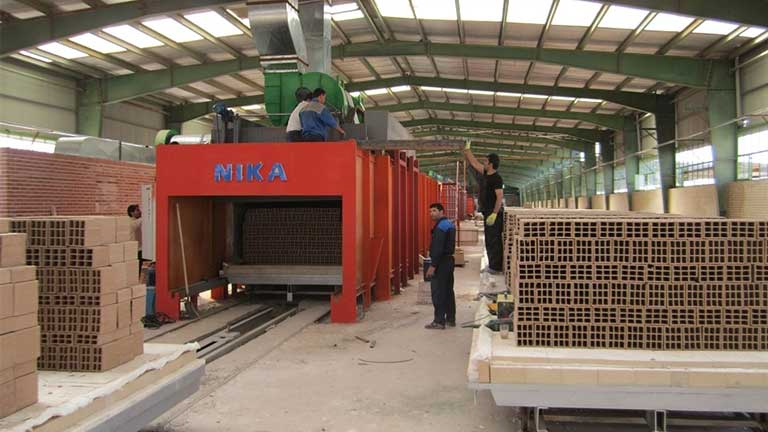
The tunnel dryer is considered one of the most advanced and efficient solutions among the best types of brick dryers for industrial factories. In this system, loaded wagons carrying green bricks move continuously through a long tunnel where controlled hot air flows across them.
The drying process occurs in stages: surface moisture evaporates first, followed by gradual internal moisture reduction. This step-by-step control prevents structural stress.
The key advantage of tunnel dryers is uniform drying combined with continuous high-capacity production. Large factories producing over 100,000 bricks per day typically use this system. When integrated with kiln heat recovery systems, energy consumption can be significantly reduced.
Although the initial investment is higher compared to simpler systems, long-term operational efficiency often justifies the cost.
Chamber Dryer: Flexible and Cost-Effective
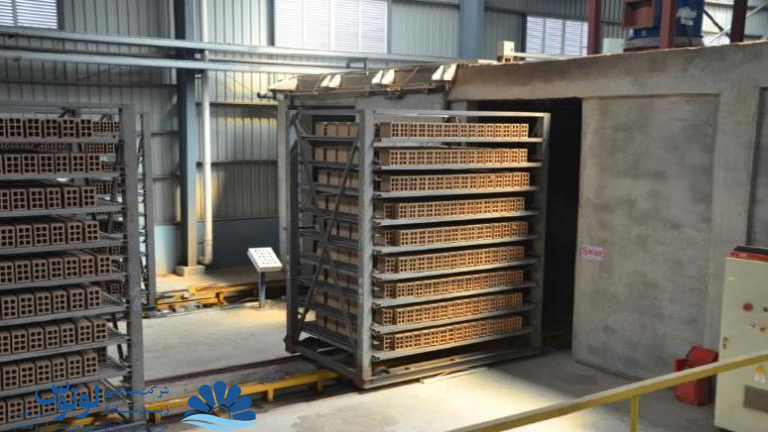
Chamber dryers are widely used in small to medium-sized factories. In this system, bricks are placed inside enclosed chambers where heated air circulates within a fixed space.
The main benefit of chamber dryers is lower initial investment and structural simplicity. They are suitable for facilities that produce different types of bricks, such as facing bricks and hollow blocks.
However, drying uniformity heavily depends on proper airflow design and equipment quality. Poor engineering may lead to uneven drying and cracking. Therefore, manufacturer expertise is crucial when choosing this type.
Heat Recovery Dryer: Energy-Optimized Solution
Advanced systems often utilize waste heat from kiln exhaust gases to power the drying section. Instead of releasing hot air into the atmosphere, it is redirected to the dryer.
This approach significantly lowers fuel consumption and improves energy efficiency indicators. Many modern factories adopt this technology to reduce operational costs and enhance sustainability.
Technical Comparison Table of Industrial Brick Dryers
Tunnel Dryer
Production Capacity: Very High
Energy Consumption: Moderate to Low (with heat recovery)
Drying Uniformity: Excellent
Investment Cost: High
Best For: Large-scale factories
Chamber Dryer
Production Capacity: Medium
Energy Consumption: Moderate
Drying Uniformity: Good (design dependent)
Investment Cost: Medium
Best For: Small and medium factories
Multi-stage Continuous Dryer
Production Capacity: High
Energy Consumption: Optimized
Drying Uniformity: Excellent
Investment Cost: High
Best For: Advanced industrial production
Heat Recovery System
Production Capacity: System dependent
Energy Consumption: Very Low
Drying Uniformity: Excellent
Investment Cost: Medium to High
Best For: Factories with tunnel kilns
Buying Guide and Pricing Considerations
Purchasing the best types of brick dryers for industrial factories requires careful analysis of production capacity, clay characteristics, regional climate, and fuel costs.
Pricing depends on several factors: tunnel length, insulation quality, temperature control systems, automation level, industrial fans, and heat recovery integration.
Chamber dryers generally require lower upfront investment, but for high-capacity production, operational costs may become higher over time. Tunnel dryers, while more expensive initially, often deliver faster return on investment due to reduced waste and improved energy efficiency.
Before purchasing, conducting a Return on Investment (ROI) analysis is strongly recommended. Evaluating operational costs over a five-year horizon helps ensure both technical and financial viability.
Professional Technical Considerations
Gradual temperature control during the early drying stages is critical. Rapid heating can cause micro-cracks that may worsen after firing. Additionally, the quality of airflow channels and industrial fans directly influences drying uniformity.
Advanced humidity control systems can minimize human error and maintain consistent product quality.
Conclusion
Selecting the best types of brick dryers for industrial factories is a strategic decision that directly affects product quality, operational efficiency, and profitability. Tunnel dryers are ideal for continuous high-capacity production, chamber dryers provide flexibility for medium-scale operations, and heat recovery systems deliver superior energy performance.
A well-planned investment in drying technology ensures reduced waste, improved structural strength, and sustainable factory growth. Making an informed decision today secures long-term industrial success.
Frequently Asked Questions (FAQ)
1. Which brick dryer is best for high-capacity factories?
Tunnel dryers combined with heat recovery systems typically offer the highest efficiency and performance for large-scale production.
2. Are chamber dryers suitable for facing bricks?
Yes, provided that airflow and temperature control are properly engineered, chamber dryers can produce high-quality facing bricks.
3. How is industrial brick dryer pricing determined?
Pricing depends on production capacity, automation level, insulation quality, airflow systems, and integrated heat recovery technology. A technical assessment is necessary for accurate cost estimation.
شرکت برنا گستر پارسی - سازنده ماشین آلات تولید آجر
The best types of brick dryers for industrial plants: comparing performance and efficiency
×
![]()
The best types of brick dryers for industrial plants: comparing performance and efficiency
Brick dryer
7 months ago